Global No. 1
Shakira Says 'Come On' in Five Languages, and 'Dai Dai' Won't Leave the Charts
What does Shakira and Burna Boy's 'Dai Dai' mean? Four months on, it is No. 1 on YouTube's weekly chart in 19 countries, with 'come on' in five languages.
Min Key,
'Dai Dai' has been out for four months, the World Cup it was made for ended on 19 July, and on 19 September it was still No. 1 on YouTube's weekly chart in 19 countries, in the top five on 39 charts and second in the world, behind LISA's 'SaWaDiKa'. It is on no country's daily trending list. Trending lists are for what is new; the weekly list counts what people keep watching, and this is what they keep watching.
So the question this piece follows is why a tournament anthem outlives its tournament. The comments give a first answer that has nothing to do with the words. The most-liked, at 349,000 likes, is a joke about Shakira's age. The next four, at 141,000, 136,000, 132,000 and 76,000, all say the same thing in different words: there is no World Cup without a Shakira song. The hook of this record is not in the lyric. It is a person.
'Dai Dai' in five points
- The title is Italian slang for come on, and the chorus says it in five languages: Italian, Japanese, Spanish, French and English.
- The verses are a pep talk to one player: you were always meant to be here, keep going. One passage then names about a dozen footballers and 14 national teams.
- Afrobeats, dance-pop and reggaeton, 3 minutes 43 seconds, produced by Shakira and A.C. A beat detector reads 117.5 beats per minute.
- The official song of the 2026 World Cup, performed at the opening in Mexico City on 11 June and at the final's halftime on 19 July.
- No. 17 on the Billboard Hot 100, the highest a World Cup anthem has reached there; No. 2 in the UK; No. 1 on the Billboard Global 200 for seven weeks. The video passed 1 billion YouTube views on 6 September.
| At a glance | |
|---|---|
| Artists | Shakira & Burna Boy |
| Released | 15 May 2026, Sony Music Latin (video 23 May) |
| Written by | Shakira, Burna Boy, Jonathan Bellion, Ed Sheeran, Benny Adam, Alexander Castillo |
| Produced by | Shakira and A.C. |
| Video | Directed by Hannah Lux Davis, filmed in Miami; cameos by Messi, Mbappé and Haaland |
| Title | Italian slang for come on |
| Genre | Afrobeats, dance-pop, reggaeton |
| Length | 3 minutes 43 seconds (video: 4:00) |
| Tempo and key | 117.5 beats per minute, C-sharp minor |
| Average level | -15.9 dBFS |
| YouTube | 1.10 billion views, 8.2 million likes (19 September) |
| YouTube weekly chart | No. 2 worldwide; No. 1 in 19 countries; top 10 on 52 of 69 charts (19 September) |
| Billboard | Hot 100 No. 17; Global 200 No. 1 for seven weeks; UK No. 2 |
What do the 'Dai Dai' lyrics mean in English?
The full lyric is on Spotify and Apple Music; we do not copy it here, and what follows is what it says, in English, in order. Dai is Italian slang for come on, the word a coach or a friend shouts to keep you going. Shakira announced the song on 7 May at the Maracanã stadium in Rio, according to the song's Wikipedia entry. The chorus then adds a Japanese word, 行こう, the Spanish dale, the French allez and the English let's go: one word for each of five languages that a large part of the world's football fans shout at a match. It is a translation exercise that doubles as a marketing plan. Whichever country you are in, there is a word in the hook you already say.
'Dai Dai' verse meaning: a pep talk from the sideline
The first verse speaks to one person, the player, and tells them they were always meant to be here, that they have been brave the whole way, and that what once broke them is what made them strong. It is a locker-room speech with no scoreline in it. The second verse adds the effort: follow what you want, the fire is yours, glory is one step off, and the story is written in sweat and blood. The build before the chorus is the training montage: highs and lows, tears and pain, and the promise that you can do it again. A Spanish couplet closes each round, telling the listener to forget the stakes and play the way they know how.
'Dai Dai' roll call meaning: fourteen countries, three of them missing
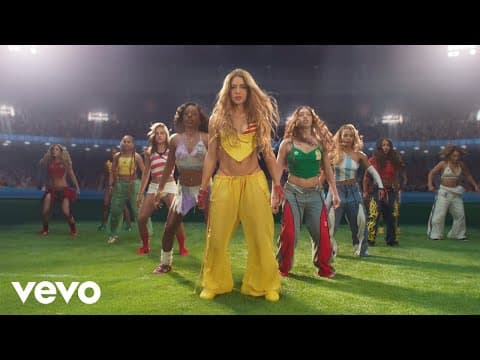
Then the song stops coaching and starts calling names. A dozen footballers are named, from Pelé and Maradona to Messi, Mbappé and Salah, and after them fourteen national teams, from Brazil and Uruguay to Japan and Korea. It is the only place in the lyric that is about football rather than effort, and it works as a checklist of where the audience lives. The video adds cameos from Lionel Messi, Kylian Mbappé and Erling Haaland, according to Wikipedia.
We checked the list against YouTube's weekly charts, the same ones behind our global music trends tracking. Of the fourteen countries the lyric names, eleven have 'Dai Dai' in their weekly top 10 and only two, France and the Netherlands, put it first. Mexico, Japan and South Korea, all named in the song, do not have it in their top 10 at all. The hook travels further than the roll call.
How 'Dai Dai' sounds: a stadium chant with room in it
We cut the video's audio into eight equal slices of about 30 seconds and measured each one against the loudest.
- 0:00-0:3051
- 0:30-1:0089
- 1:00-1:3083
- 1:30-2:0099
- 2:00-2:3090
- 2:30-3:00100
- 3:00-3:3088
- 3:30-4:0079
The shape is a chant that grows: the first slice, at 51, is the opening call and response, and from 0:30 the level stays between 79 and 100. The average level is about -15.9 dBFS, which is quieter than the five other videos we measured on 19 September, whose averages run from -9.5 to -11.6. Our reading is that a stadium song is not built to be loud on a phone. It is built to leave room for thousands of people to sing over it.
What the comments say about 'Dai Dai'
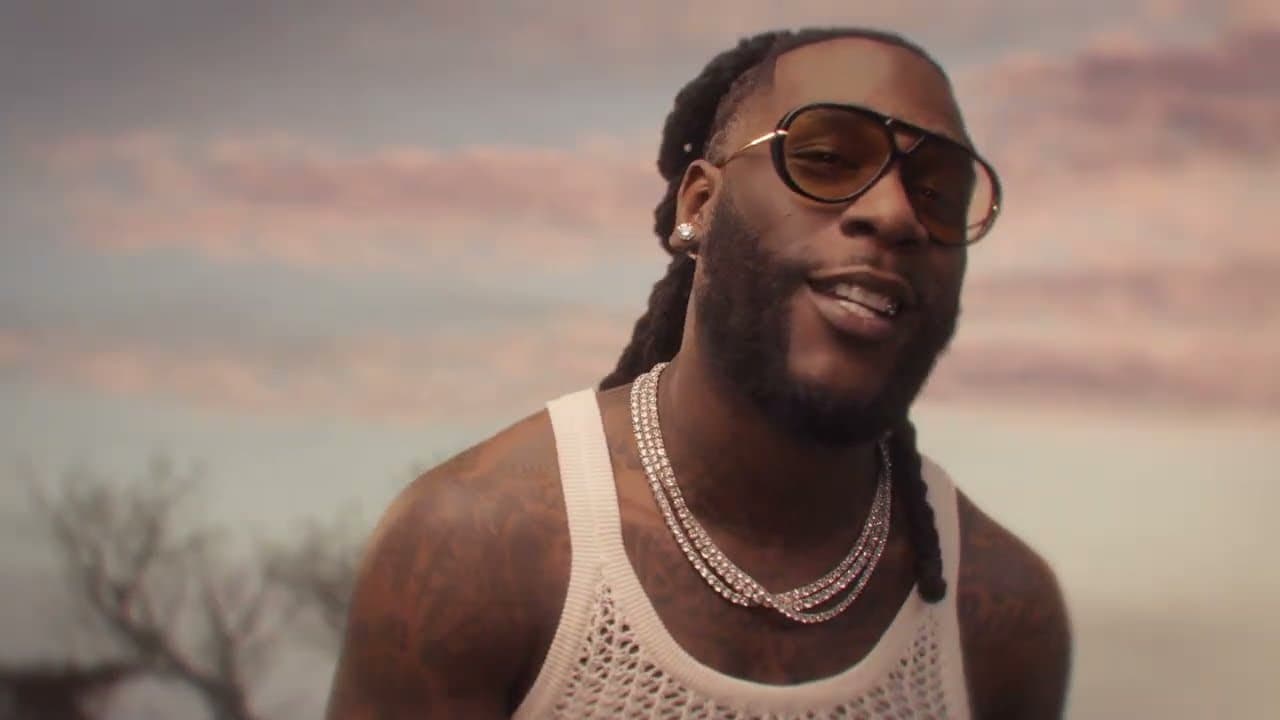
The comment section is a fan club for one artist. After the age joke, the top ten repeat the same idea in variations: Mariah Carey owns Christmas and Shakira owns every World Cup, the tournament feels incomplete without her, and nobody remembers all the finalists but everybody remembers the song. Two comments, at 16,000 and 14,000 likes, ask who is here after the billion views. The video's cameos get one joke of their own: a 3,100-like comment says we got to hear Messi speak English before GTA 6 came out. Almost nothing is about the words. The audience has decided what the song is for, which is to be the sound of the tournament, and the tournament being over has not changed that.
Where 'Dai Dai' stands
The song came out on 15 May 2026 through Sony Music Latin, and the video, directed by Hannah Lux Davis in Miami, followed on 23 May. The credits list Shakira, Burna Boy, Jonathan Bellion, Ed Sheeran, Benny Adam and Alexander Castillo as writers. It reached No. 17 on the Billboard Hot 100, No. 2 in the UK, its best there for Shakira since 2007, and No. 1 in Argentina, Austria, Belgium, Colombia, France, Germany, Italy, the Netherlands, Norway, Poland, Portugal, Sweden, Switzerland and the United Arab Emirates. Billboard reported a tenth week at No. 1 on its Global Excl. U.S. chart in early September, and Newsweek's Marni Rose McFall called it a massive, rhythm-driven anthem.
On 19 September the video had 1.10 billion views and 8.2 million likes. On YouTube's weekly chart it was No. 1 in 16 European countries plus New Zealand, Kenya and Panama, No. 2 in the world, No. 3 in the United States and No. 2 in the UK, Germany and Spain. The world's No. 1 that week was LISA's 'SaWaDiKa', and JISOO's 'CLICK' was fourth.
So why does a tournament song outlive its tournament? Because it was built to be sung by anyone: a hook that says come on in five languages, verses that talk to whoever needs the talk, a roll call that lets every fan hear their own country. And because the person on the record is, as 349,000 commenters keep joking, the one part of the World Cup that never ages.
About the data
- The chart comparison uses YouTube's own chart playlists, read on 19 September 2026: Trending 20 (today) in 68 countries and Top 100 Songs (this week) in 69, the global list among them. We do not reprint the charts. 'Dai Dai' is on none of the daily lists, because the daily list favours new videos. The audio figures come from the official video's soundtrack, cut into eight equal slices; each slice's level is its average against the loudest, and the tempo and key are automatic estimates. The average level is the track's RMS in dBFS. The recording was deleted after measurement. The view and like counts and the comments are from the YouTube page on 19 September 2026.
- We read the lyric and describe it; we do not reproduce it. The words are shown with the song on Spotify and Apple Music. The release dates, credits, the video, the live performances and the chart peaks come from the song's Wikipedia entry, with the tenth week at No. 1 on Billboard's Global Excl. U.S. chart from Billboard's report. The Newsweek comment is as quoted in the Wikipedia entry.
Follow mymy
The songs the world is playing: No. 1s across 60+ countries, AI-or-human checks and what the songs mean.
More song meanings and trends
Still: Siempre Blessd / YouTube
NextNew release · BLESSD x ANUEL AA'CAPCANA COCOA' and the hug at 0:39A luxury boast with the explicit parts left unprinted and a beat that never lets up; the moment people talked about is a hug, not a line.Keep readingMin Key



Comments
Comments
Loading comments…
Checking…