A 1994 Italian song with a Russian title
'Ja Tebia Liubliu' Means I Love You. Adriano Celentano Sings the 'Yes, Yes' Song
What language is 'Ja Tebia Liubliu'? The title is Russian for 'I love you', but Adriano Celentano sings in Italian. Its 'yes, yes' chorus has four languages.
Min Key,
'Ja Tebia Liubliu' is the Russian Я тебя люблю, 'I love you', written in Latin letters; it is also spelled ya tebya lyublyu. The song itself is Italian. Adriano Celentano sings the verses and the bridge in Italian, and only the chorus changes language, saying 'I love you' in Russian, French, English and German, one after another.
On 14 November (UTC), none of the 70 national Shazam charts our radar reads had the song in its top 100. A day later, 27 of them did, and Shazam's worldwide chart had it at No. 24, 32 years after its release. The speech model we ran over the recording identified the singing as Italian, and the second verse adds the Italian ti amo, which makes five languages for one sentence.
Claudia Mori's words for Adriano Celentano: where 'Ja Tebia Liubliu' comes from
'Ja Tebia Liubliu' is track 9 of Quel punto, which Celentano released in 1994 on Clan, the record label he founded. The album's credits on Italian Wikipedia give the words to Claudia Mori and Fabrizio Berlincioni and the music to Mauro Spina, a drummer who also wrote the music for the album's title track; English Wikipedia lists the same three writers without dividing words and music. Mori and Celentano married in 1964, and she had been running the label since 1991. The 2018 'Collezione D'Oro' remaster, the most-viewed official upload on YouTube, credits Celentano alone, as composer and lyricist, a line that comes from the distributor's upload and not from the 1994 album.
Language games were not new to him. The same album has 'Il seme del rap', a rap remake of his 1972 'Prisencolinensinainciusol', a song sung in made-up words meant to sound like English to Italian ears. 'Ja Tebia Liubliu' does the reverse, with real words in real languages. Italian Wikipedia describes the album as one of the least successful records he ever made.
The “yes, yes, I love you” song: Russian, French, English and German in one chorus
In the recording, the chorus first arrives at about 1:58, just before the two-minute mark, and comes back at about 3:52. Our speech model caught the French oui at 2:07 and the English yes at 2:16, and the yes again at 4:11. Each pass takes a little over half a minute, about 36 seconds, and every language in it gets two phrases: the first says 'I love you', the second adds something to it.
In Russian the title line comes with a vow, that he cannot live without her. In French a double oui comes before je t'aime, and the next line says it holds every time she wakes up. The English pair is the one that names the song in many Shorts titles: “Yes, yes, I love you”, then “It's so easy to say and to do”. In German he repeats the 'I' before ich liebe dich and gives a reason: she is the only one who makes him laugh.
In Italian, he watches her sleep, teases her and follows her onto the metro
As the first verse opens he is drying his face, looking at her and wondering what she will dream. Many mornings he has seen her beside him, her eyes on his, and he knows what she is like and what she wants, and she is like him. The next lines are about time: life taught the two of them to live together and forced them to grow up, but it is life that is getting old, not them, and it cannot fool them or knock them down any more.
The bridge, which our section analysis hears at 1:18 and again at 3:24, calls the couple angels and sometimes devils in a world without scruples, free but within limits, giving up dreams for habits. Then he turns to her directly: she is the only one, maybe the last, and he asks her to wake up because he wants to tell her something she already knows. What he tells her is the four-language chorus.
In the second verse she is the one who is right in a world of mistakes. He says ti amo and cannot stop laughing with her, and then he teases: she is no great beauty, she is almost never calm, so what is she like? Nobody, he says, can tamper with his idea of her, and he follows her on the metro and dreams of her in an overcoat. The second bridge makes them accomplices and ends with him asking her to listen, before the chorus comes round again. The laughing here matches the German line that ends each chorus.
5:30 uncut, 4:15 in three October lyric videos: what the short version drops
Uncut, the 2018 remaster runs 5:30. The first 40 seconds are drums and band, with no voice. Celentano comes in at 0:40, and the genre labels our sound classifier gives most often after that are independent music, soul music, country and happy music. At about 4:30, straight after the last German line, the band switches to a swing section, where the classifier hears brass and trumpet; the album's line-up lists two trumpeters, a trombonist and two saxophonists. The last 24 seconds drop to about a fifth of the level of the swing passage before them, and from about 5:15 the music is gone: the classifier's top labels there are train, rail transport, a railway carriage and clickety-clack. Run over that stretch on its own, our speech model finds no words.
That ending is missing from three lyric videos uploaded in October: the one posted on 10 October (893,545 views) and two more from 25 October (376,881) and 29 October (230,189), all 4:15 long. We matched their audio against the full recording: each starts about 30 seconds in, ten seconds before the voice, and stops about 46 seconds before the end. Most of the drum opening, most of the brass coda and the train are gone; the verses, both bridges and both passes of the chorus remain.
From no Shazam top 100 to 27 in one day, and comments that name Instagram
In the daily reads we kept from 1 October to 14 November (UTC), four days missing, 'Ja Tebia Liubliu' never reached a national Shazam top 100; the only Celentano recording that turned up in them was 'Prisencolinensinainciusol', low on the charts of Costa Rica, Belgium and Italy. The read of 15 November found 'Ja Tebia Liubliu' in 27, highest in Azerbaijan and Uzbekistan (6th), Kazakhstan (7th) and Türkiye (8th), then India (15th), Germany and Ukraine (18th) and the United Arab Emirates (20th), with Tunisia, Morocco, Saudi Arabia, Algeria and Egypt between 25th and 50th. Finland (12th) and the Netherlands (17th) also had it. Russian-language songs held the top places on both charts that day, though, so those two say less about new listeners than the rest.
YouTube comments picked up before Shazam did. On the remastered upload, 310 of its 421 top-level comments carry YouTube's dates of '1 month ago' or newer, against 21 dated '2 months ago' and 20 dated '3 months ago'. On the most-viewed fan upload, posted in 2007 and with 25.5 million views, the same split is 306 against 29 and 20. Of the 616 recent comments on the two uploads, 47 mention Instagram or its Reels, against 15 that mention TikTok. YouTube's page for the sound counts about 32,000 Shorts, and 9 of the 24 on its first screen put the English line in their titles.
Shorts name the song by its English 'yes, yes', and people look it up by its Russian title, but the voice on both is an Italian one, singing mostly in Italian.
| 'Ja Tebia Liubliu' | |
|---|---|
| Title | Russian Я тебя люблю, 'I love you', also written ya tebya lyublyu |
| Artist | Adriano Celentano (Italy) |
| Album | Quel punto, track 9 (Clan, 1994) |
| Words / music | Claudia Mori and Fabrizio Berlincioni / Mauro Spina (album credits) |
| Credit on the 2018 remaster | Adriano Celentano, words and music (distributor's upload) |
| Sung in | Italian; the chorus in Russian, French, English and German |
| Length | 5:30 (2018 remaster); 4:15 in three October 2026 lyric videos |
| Shazam | No. 24 worldwide; top 100 in 27 countries (15 Nov 2026) |
| Last checked | 15 November 2026 (UTC) |
For another chorus that says one thing in several languages, see what language Shakira's 'Dai Dai' is in; for another old song Shazam brought back, Prince Royce's 2010 'Rechazame'. The day's other movers are on the mymy trends desk.
About the data
- The answer to the language question rests on two checks: the lyrics, and a language-naming speech model with word timings that we ran over the 2018 remaster, which named the singing Italian and placed the French and English words of the chorus. We also cut the recording into sections by repeated sound and tagged each with a sound classifier, whose labels are guesses rather than facts, and deleted the file once the analysis was done. The three October lyric videos were matched to the full recording by comparing the harmony of their first and last 20 seconds. For the Shazam positions, once a day, near 22:00 UTC, our radar copies every national Shazam top 100 it can reach, as many as 70, and every date given here is the UTC day of a copy; the worldwide place is from Shazam's own top 200 file, read at 22:15 UTC on 15 November. Comment counts use YouTube's own relative dates ('1 month ago', '2 weeks ago'), which are rounded, cover top-level comments only, not replies, and count the platforms by name in the comment text, in Latin and Cyrillic letters. TikTok and Instagram are closed to our tools, so their share rests only on what commenters wrote.
- The lyrics were read from lrclib.net, where at least 20 separate entries for the song carry the same text, and checked against what the speech model heard. Apart from the English chorus lines quoted above, everything here is our own summary of the Italian, Russian, French and German. View counts were read on 15 November 2026 (UTC). The credits and the album's history come from the Italian and English Wikipedia pages for Quel punto and Claudia Mori and from the uploads' own descriptions; nothing here is taken from another publication's text.
Follow mymy
The songs the world is playing: No. 1s across 60+ countries, AI-or-human checks and what the songs mean.
One notification for each new piece. No account, no email: your phone keeps the subscription and you can turn it off here.
More song meanings and trends
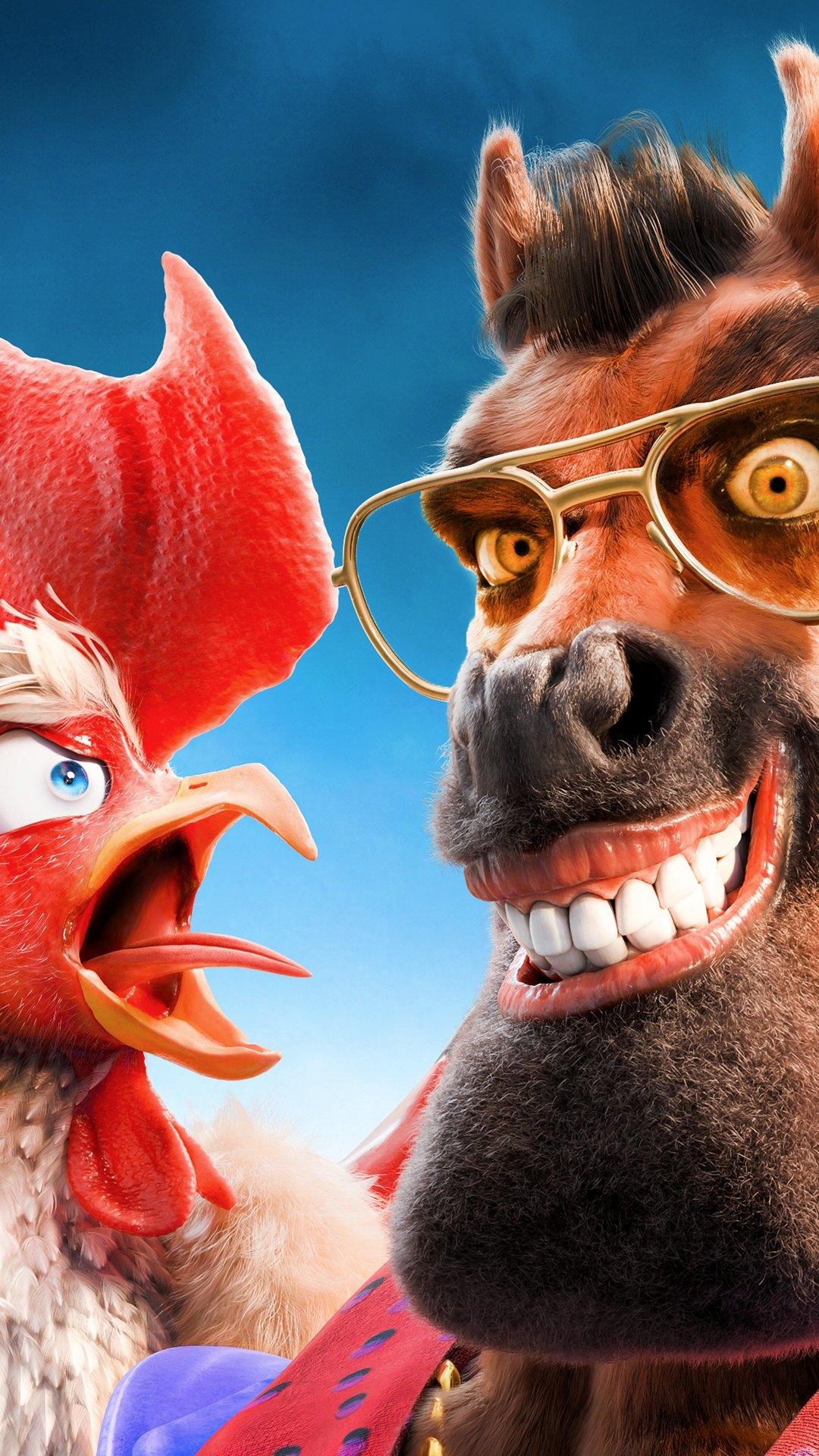
Artwork: Horror Skunx ('TAF' single)
NextNew release · Horror SkunxThe Dutchman behind a horse called TAFA louder, slower sequel that leans on one name sung 14 times and a rooster villain. It went straight to No. 1 on YouTube's US daily chart, where none of Horror Skunx's five earlier songs since July had got higher than sixth.Keep readingMin Key





Comments
Comments
Loading comments…
Checking…