A film set 23 days before its song came out
Steve Winwood's 'Valerie' Is the Only End of Oak Street Song in Shazam Top 200s
After The End of Oak Street reached HBO Max, Steve Winwood's 1982 'Valerie' drew 3 times its cinema-week Wikipedia readers a day and made 8 Shazam top 100s.
Min Key, · Written with AI tools
Steve Winwood's 'Valerie' was in Shazam's top 100 in eight countries on 16 November (UTC): No. 25 in Argentina, 29 in Chile, 48 in the United States, 50 in Uruguay, 52 in Spain, 66 in the United Kingdom, 71 in Australia and 78 in Denmark. The song is from 1982, and it plays in The End of Oak Street, which Warner Bros. put on HBO Max three days before that chart. The studio billed it as the film's global streaming debut. Of the 17 pieces of licensed music in the film, Winwood's is the only one in Shazam's top 200s.
The film opened in cinemas in August and went on sale for home viewing in September; HBO Max came third. On 14 and 15 November, its first weekend there, the English Wikipedia page for the song drew more than three times as many readers a day as in the film's opening week in cinemas, while the film's own page drew about a third fewer.
Shazam had shown the song in one country at a time
We have 42 readings of Shazam's charts in up to 70 countries since 2 October, taken about once a day, with five daily runs missed. Before the film reached HBO Max, they had the song at No. 98 in Argentina on 2 October, then at No. 27 to 32 in Norway for seven straight readings from 19 to 25 October, a run we could not trace to anything. The reading taken late on 14 November (UTC), the day after the HBO Max debut, had it in no country's top 100. The next, on 15 November, had it at No. 76 in Spain, and the one after that had the eight countries above. Read down to No. 200, the same day's charts add Brazil (102), Canada and Norway (104 each), Sweden (119) and Hungary (153), and the worldwide chart has it at No. 182.
The track those charts link to is the original recording from Winwood's 1982 album Talking Back to the Night, on which he played every instrument himself. Tom Lord-Alge's 1987 remix, released on the compilation Chronicles, is a different track. It went to No. 9 on the Billboard Hot 100 that December; the 1982 single had stopped at No. 70. Will Jennings wrote the words, in which a man remembers a woman who drifted out of his life and asks her to come back: “Valerie, call on me”. Eric Prydz later built his 2004 hit 'Call on Me' on a sample of the song, and Winwood recorded the vocals again for it.
The End of Oak Street, written and directed by David Robert Mitchell, stars Anne Hathaway and Ewan McGregor as parents whose Michigan suburb is flung from 1982 back to the time of the dinosaurs. The story starts on 10 July 1982, 23 days before Talking Back to the Night came out on 2 August.
The film's 16 other licensed tracks missed every Shazam chart we read
IMDb's soundtrack list for the film names 17 pieces of licensed music. Among them are Pat Benatar's 'Hit Me with Your Best Shot', The Vapors' 'Turning Japanese' and Roxy Music's 'More Than This', along with the themes from The Love Boat and The Flintstones and two old advertising jingles. Only Winwood's song has appeared in any of our Shazam readings since October. The film's soundtrack album, released by WaterTower Music in August, has only Michael Giacchino's score, so none of these songs is on it.
Their Wikipedia pages gained far fewer readers over the HBO Max weekend. On 15 November the page for 'Turning Japanese' had 296 readers, against a daily average of 183 for 6 to 12 November; 'Hit Me with Your Best Shot' had 181 against 110, and 'More Than This' 29 against 26. The page for Winwood's song had 2,117 against 274, its busiest day since at least June.
The song's share of the film's new readers grew with each home release
We used the film's own Wikipedia page to gauge how much attention the film had at each stage. That page was busiest in the opening week in cinemas, at 111,503 readers a day on average; the song's page was busiest over the HBO Max weekend, at 2,056.
| Days (UTC) | The film's page | The song's page | Song readers gained per 1,000 film readers gained |
|---|---|---|---|
| 1 to 13 August, before the US opening | 39,621 | 243 | baseline |
| 14 to 20 August, cinemas | 111,503 | 628 | 5.4 |
| 1 to 13 September, before rental | 15,676 | 321 | baseline |
| 15 to 21 September, rental and sale | 44,187 | 768 | 15.7 |
| 6 to 12 November, before HBO Max | 7,029 | 274 | baseline |
| 14 and 15 November, HBO Max | 74,789 | 2,056 | 26.3 |
Both pages already had readers before each release, so the comparison that matters is what each release added. For every 1,000 readers the film's page gained, the song's page gained about 5 in the cinema week, 16 in the rental week and 26 on the HBO Max weekend.
At home a viewer can pause the film or check a phone mid-scene, which a cinema discourages. Pageviews cannot show where anyone watched, though, and the film's page counts only the viewers who look a film up. When Spider-Man: Brand New Day went digital and Tame Impala's 'Loser' rose from 26 to 49 countries in Shazam's top 50s, we had no Shazam reading from that film's cinema run to set the jump against. For The End of Oak Street the Wikipedia counts cover cinemas, rental and streaming.
Most comments naming Oak Street came before HBO Max
The official music video had 27,078,095 views on 16 November, and its 600 most recent comments go back to July. Oak Street comes up in 176 of them. YouTube labels 167 of those as one to three months old, from about mid-August to mid-October, and seven of the other nine as three days old or newer. Comments of all kinds picked up after the debut as well, to about seven a day in the three days after it, from two or three a day in the week and a half before.
On Spotify's daily charts for 14 November, the latest kworb.net had posted when we looked, the song was not in the top 200 worldwide or in any of the eight countries, and none of the YouTube or Apple Music charts our radar reads had it on 16 November. So far the change shows where people go to identify a song or read about it, Shazam and Wikipedia, and not on the streaming charts. The song's best Shazam place on 16 November was No. 25, in Argentina.
About the data
- The Wikipedia figures are Wikimedia's daily pageview counts for human readers of English Wikipedia, by UTC day, for each page under its current title; redirects and other languages are not counted. Between 2 October and 16 November 2026 (UTC), our radar recorded places 1 to 100 of Shazam's chart in up to 70 countries, normally once a day; five daily runs were missed (14 to 17 and 30 October by run date), a few readings covered fewer than 70 countries, and the last three were taken at about 22:10 on 14 and 15 November and 23:35 on 16 November. We read all 70 country charts and the worldwide chart down to No. 200 once more on 16 November. The 'Valerie' on those charts is Apple Music's listing of the track from Talking Back to the Night (1982), not the 1987 remix. The YouTube comment count covers the 600 most recent comments on the official video, sorted by YouTube as newest first, with the dates YouTube shows; we counted the ones that name Oak Street and did not quote any.
- The film's dates come from Warner Bros.' press release of 9 November 2026 (HBO Max from Friday 13 November, the HBO television channel at 8:00 p.m. ET on 14 November, which is 15 November in UTC, so the second of the two weekend days also follows a television showing), the film's Wikipedia page (premiere 9 August, United States cinemas 14 August, story set on 10 July 1982) and Dread Central's report of the home release on 15 September. The list of licensed music is the soundtrack list on IMDb. Chart places for 1982 and 1987, the remix credit, Will Jennings's lyric credit, the album's release date and the note that Winwood played every instrument on it are from the English Wikipedia pages for the song and for Talking Back to the Night. The lyric line is quoted from lrclib.net. Spotify's daily charts were read on kworb.net.
Follow mymy
The songs the world is playing: No. 1s across 60+ countries, AI-or-human checks and what the songs mean.
One notification for each new piece. No account, no email: your phone keeps the subscription and you can turn it off here.
More song meanings and trends
Photo: Nikita Kozyrev, Vladimir Bogdanov (cropped), CC BY-SA 3.0
NextA 1994 Italian song with a Russian titleCelentano's 'yes, yes' song is ItalianWhat language is 'Ja Tebia Liubliu'? The title is Russian for 'I love you', but Adriano Celentano sings in Italian. Its 'yes, yes' chorus has four languages.Keep readingMin Key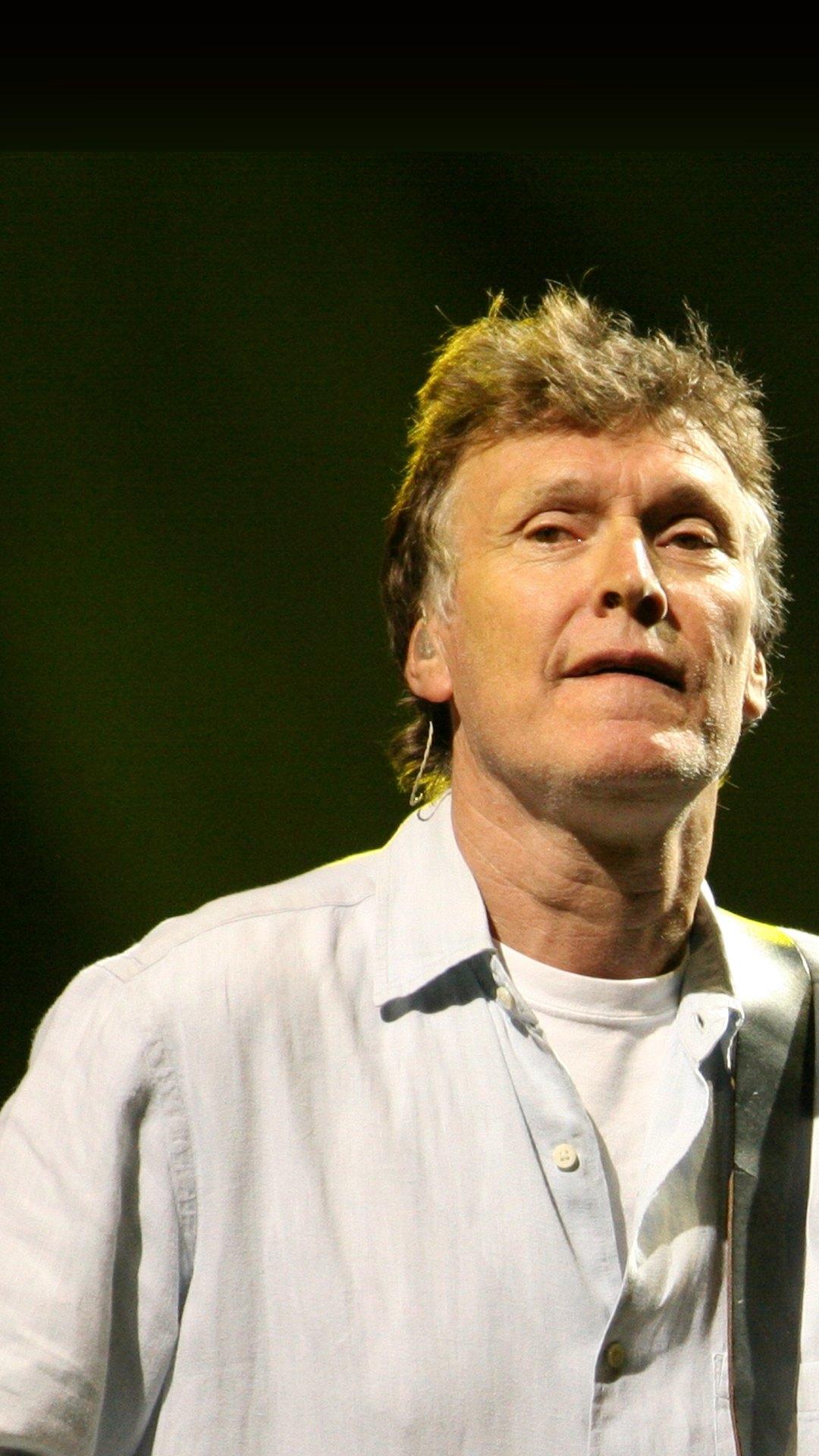


Comments
Comments
Loading comments…
Checking…