Song meaning
'Alfaaz' Meaning in English: Hamza Malik's Pakistani Song Tops Shazam in India
What does 'Alfaaz' by Hamza Malik and Zain Zohaib mean in English? 'Words': none can praise the one he loves. No. 1 on Spotify Pakistan and Shazam India.
Min Key,
'Alfaaz' means 'words', and the song by Hamza Malik and the qawwali brothers Zain Zohaib is about not having any. Its chorus says there are no words to praise the person the singer loves. The Pakistani song came out on 23 July 2026 and on 12 October topped Shazam's India chart, ahead of every Indian film song. On Spotify it had been No. 1 in Pakistan for 35 of its 62 days on the daily chart by 10 October, and No. 3 in India.
Google suggests 'alfaaz hamza malik lyrics in english' and 'in hindi' as people type. Everyday Urdu and Hindi share their grammar and most common words, and words such as ishq, tareef and khayal are familiar from Hindi film songs, so Hindi speakers can follow much of the Urdu by ear. But the official video spells the words out in Roman letters without a translation, the lyric file we read is in Urdu script, and the middle of the song switches to Punjabi. This piece goes through every part of 'Alfaaz' in English, then looks at how it sounds and why a song from Pakistan is climbing YouTube's charts in India and Canada.
'Alfaaz' lyrics meaning in English: the Urdu verses and chorus
The song opens in Urdu with surprise. The singer did not notice the change in himself; he has slipped into love and asks what he can do about it now. Before he saw the one he loves, he says, he was afraid of giving his heart to anyone. The word he uses for that first sight is deedar, which Urdu took from Persian for a glimpse of someone longed for; in Sufi poetry and qawwali it can also mean a vision of God. The rest of the song stays with a human love, but with a qawwali group singing, the word keeps that echo.
The next lines turn out to be about distance. He asks how the beloved looks these days and whether anyone has seen them, then asks whoever has to mention him too, so he is not forgotten. The love story is told by someone who has to ask others for news.
Then comes the chorus that gives the song its name. “Unki tareef mein kahein kya”, which fans often type as 'unki tareef mein kahe kya', asks what anyone could say in their praise, and the answer is that there are no alfaaz, no words. Everything he has belongs to them; he swears no one is more special to him; he thinks of them a great deal. Notice the pronoun. Urdu uses un, the respectful plural, for one person held in high regard, so the chorus speaks about the beloved politely, from a step away.
The Punjabi verse of 'Alfaaz' comes closer
In the middle the language changes to Punjabi and the distance closes. Here the singer speaks to the beloved directly as tu, the intimate 'you', which he used only once before, in the opening line about first sight; the Urdu chorus talks about them, as un. He asks them to stay in front of his eyes for a long time, so he can look at them through the night until morning. The best-known line, “Baagan vichon main te tode tere layi gulab ve”, says he picked roses from the gardens for them; many fan videos use that line as their title. In the same verse he says all he ever does is keep calling them aap janab, a doubly polite 'you, sir': aap is the most respectful Urdu 'you', janab an honorific. Even in the closest verse, the respect stays.
The praise grows. The beloved is lovelier than the stars, there will never be another like them, and all the love he knew how to give, he has given to them. He would kiss the paths they once walked on. There are only two choices left: them, or no one. A single line asks them to listen to him too, and the Urdu chorus returns twice to close the song.
Piano first, then hand drums for the Punjabi verse
We put the official visualiser through our listening tools. The track runs 3 minutes 5 seconds and begins with soft piano and ambient keys; the first voice arrives at 25.6 seconds, and the volume keeps rising until the chorus at 0:48. The Punjabi section, from 1:12 to 2:06, is where the sound changes most: our classifier hears tabla-like hand drums and folk music there, and the sung words speed up to about two and a half a second at their fastest, in the lines about kissing the paths and 'you, or no one'. At 2:06 the music drops back and the chorus comes in softly; at 2:21 the full sound returns, the loudest stretch of the track, averaging 61 percent of the track's loudest moment. The words end at 2:57, and the last seven seconds are an echoing tail.
The credits on YouTube list Hamza Malik, Zain Ali and Najaf Ali as composers, Hamza Malik and Zahid Bashir as lyricists and Atif Khan as producer, with guitar by Awais Kazmi.
Who are Hamza Malik and Zain Zohaib?
Hamza Malik is a Lahore-based singer-songwriter who studied musicology at the National College of Arts there. His best-known earlier song, 'O Jaana', paired him with Rahat Fateh Ali Khan; its video was the singer and actor Farhan Saeed's debut as a director and starred Iqra Aziz.
Zain Zohaib is a qawwali group, singers of the Sufi devotional music of Pakistan and north India, led by the brothers Zain Ali and Zohaib Ali. They broke through with 'Haiderium' on the Pakistani music series Nescafe Basement in 2019 and sang on the soundtrack of the 2024 Pakistani drama Abdullahpur Ka Devdas.
Is 'Alfaaz' a Pakistani song? Why it charts in India and Canada
Yes. Hamza Malik, a Lahore-based singer-songwriter, and the qawwali group Zain Zohaib are Pakistani, and the song is theirs. It is not by Alfaaz, the Indian Punjabi singer who uses that name. YouTube's own charts have no list for Pakistan, so the song's home success does not show there. What does show is the spread. In YouTube's song rankings for the seven days to 8 October, 'Alfaaz' was No. 12 in the world, up from 35; No. 8 in Canada, up from 28; No. 10 in India, up from 23, with 11.8 million views in India alone; and No. 16 in the United Arab Emirates. It was 21st among songs used in Shorts in India.
The official visualiser had 17.9 million views on 12 October and the audio track another 8.6 million. One fan's lyric video, posted five days after the visualiser, had 14.1 million on its own, about four-fifths of the official count. People are not only listening; they are looking up the words. India already gives YouTube its most viewed artist week after week, the film singer Alka Yagnik; 'Alfaaz' shows the same listeners reaching across the border for a love song many can hum but only half understand.
'Alfaaz' is a confession that runs out of words: polite and from a distance in Urdu, close and unguarded in Punjabi, and in both languages sure that there is no one else.
About the data
- Charts were read on 12 October 2026, Bali time: YouTube Charts' weekly song lists for the seven days to 8 October (world, India, Canada, the United Arab Emirates; there is no Pakistan list) and its daily Shorts songs; Shazam's India top 200 for 12 October; Spotify's daily charts for 10 October through kworb.net, with days on chart. View counts are YouTube's on 12 October. Our listening tools went over the official visualiser: they mark where the music repeats, measure how loud each part is, time the singing and guess at the instruments, and the file is deleted once they finish.
- The lyrics were read in Urdu and Shahmukhi script from LRCLIB (48 lines) and checked against the Roman-letter lyrics printed under the visualiser on YouTube; the transliterations and English meanings are ours. We quoted two lines and described the rest. Credits are YouTube's for the audio track. Background on Hamza Malik is from Daily Pakistan (June 2023 and February 2024) and on Zain Zohaib from Gulf News, Nescafe Basement's season 5 episode list and the soundtrack credits of Abdullahpur Ka Devdas.
Follow mymy
The songs the world is playing: No. 1s across 60+ countries, AI-or-human checks and what the songs mean.
More song meanings and trends

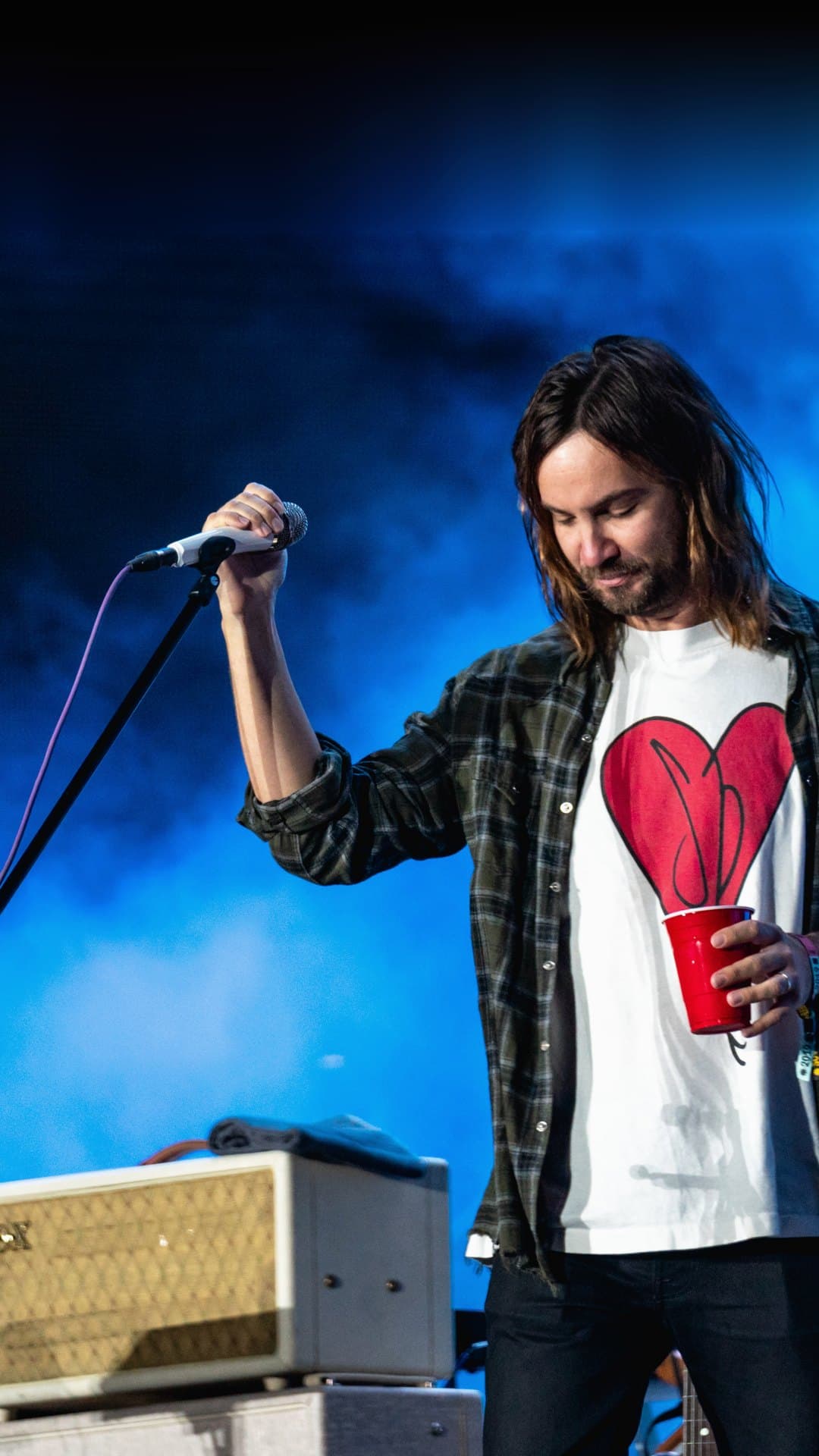
Photo: Camaal Fotografia (cropped), CC BY-SA 4.0
NextThe data behind YouTube's No. 1Why India's voices rule YouTube's chartWho is the most viewed artist on YouTube? Weekly, India's Alka Yagnik, No. 1 since October 2022; all time, Bad Bunny. Why India leads, and what AI changes.Keep readingMin Key






Comments
Comments
Loading comments…
Checking…