The data behind YouTube's No. 1
Who Is the Most Viewed Artist on YouTube? Alka Yagnik Weekly, Bad Bunny All Time
Who is the most viewed artist on YouTube? Weekly, India's Alka Yagnik, No. 1 since October 2022; all time, Bad Bunny. Why India leads, and what AI changes.
Min Key,
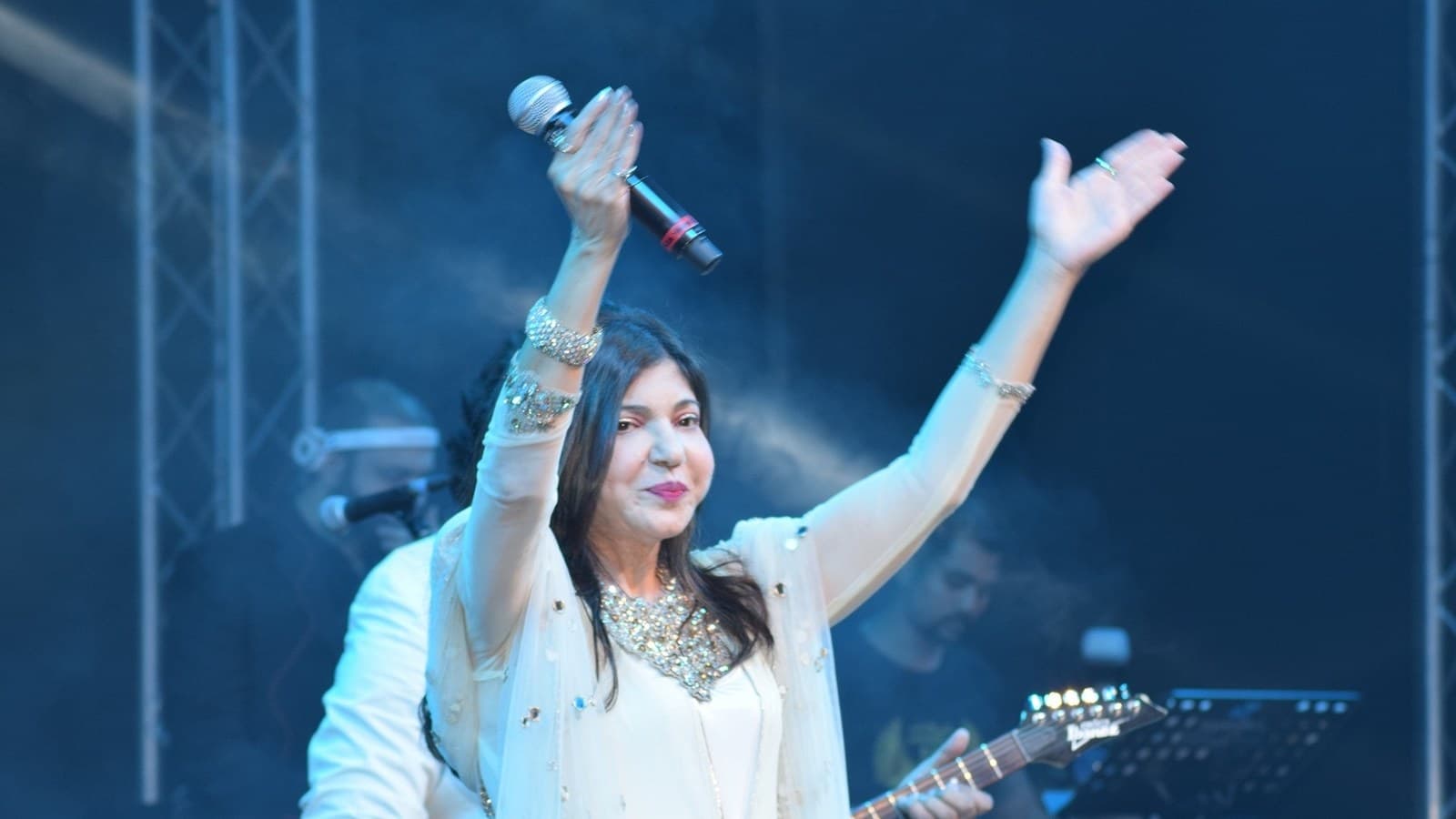
Week after week, the most viewed artist on YouTube is Alka Yagnik, a Hindi film playback singer whose best-known songs are from the 1990s. Over all time, the leader is Bad Bunny, by one third-party tally. On YouTube's own Global Weekly Top Artists chart for the week ending 8 October 2026, Alka Yagnik had 481,424,170 views, her 209th week in a row at No. 1 since the week ending 13 October 2022. The four names below her were Indian too: Udit Narayan with 355 million, Arijit Singh with 324 million, Shreya Ghoshal with 295 million and Kumar Sanu with 271 million. Bad Bunny was sixth and Taylor Swift 17th.
Eight of that week's top ten were Indian musicians, and 21 of the top 40. Counted over all time, ChartMasters' tally of every view since YouTube began gave Bad Bunny about 91 billion on 11 October 2026, to Alka Yagnik's 77 billion. Guinness World Records, using the same tally, named her the most streamed act on YouTube for 2022, with 15.3 billion streams in that year alone, about four in five of them from India.
- Alka Yagnik100
- Udit Narayan74
- Arijit Singh67
- Shreya Ghoshal61
- Kumar Sanu56
- Bad Bunny38
- Sonu Nigam34
- Shilpi Raj33
- Pritam33
- Shakira32
- Taylor Swift26
This piece looks at how that happened: how YouTube counts an artist's views, who the five singers are and what their songs sound like, what in India's popular culture keeps the numbers so high, and what artificial intelligence may do to a music culture built on voices.
Ten years of YouTube's top ten artists, from no Indian act to eight
YouTube's weekly artist chart has records going back to 2016. We read the chart for the first week of October in every year since. In 2016 there was no Indian act in the top ten; The Chainsmokers were No. 1. A year later there were four, with Arijit Singh third, Alka Yagnik fourth and Udit Narayan fifth. By 2022 there were eight. The table gives the count for each year.
| Week ending | No. 1 that week | Indian acts in the top 10 |
|---|---|---|
| 6 Oct 2016 | The Chainsmokers | 0 |
| 5 Oct 2017 | Ozuna | 4 |
| 4 Oct 2018 | Alka Yagnik | 4 |
| 3 Oct 2019 | J Balvin | 5 |
| 1 Oct 2020 | Alka Yagnik | 6 |
| 7 Oct 2021 | Alka Yagnik | 7 |
| 6 Oct 2022 | Bad Bunny | 8 |
| 5 Oct 2023 | Alka Yagnik | 7 |
| 3 Oct 2024 | Alka Yagnik | 8 |
| 2 Oct 2025 | Alka Yagnik | 6 |
| 8 Oct 2026 | Alka Yagnik | 8 |
The rise began in the year after Reliance Jio started giving away mobile data in India, on 5 September 2016. We have not tested whether one caused the other, and the next section shows why the counting rules matter as much as the audience. Alka Yagnik was already No. 1 in our 2018, 2020 and 2021 snapshots. Bad Bunny held the top place in the week ending 6 October 2022. From the following week to the week ending 8 October 2026, Alka Yagnik did not lose it.
Why Alka Yagnik is No. 1: how YouTube counts an artist's views
YouTube's help pages say artists are ranked by the total view count across an artist's entire discography. The list of what counts is long: official music videos, lyric videos, live performances, remixes, album songs, collaborations, and user-made videos with the official song. Paid advertising views are excluded. An artist's total is built from the song views attributed to that artist.
Attribution is where India's numbers multiply. On YouTube Music, the 2003 film song 'Oodhni' is credited to four names: the singers Udit Narayan and Alka Yagnik, the composer Himesh Reshammiya and the lyricist Sameer. One play counts toward four artists. That is why a lyricist, Sameer, was No. 33 on the global artist chart in the week ending 8 October 2026, with 91 million views, and why composers such as Pritam (No. 9), Himesh Reshammiya (No. 31) and A. R. Rahman (No. 38) appear among the singers. Guinness lists Sameer as Bollywood's most prolific lyricist, with 3,524 songs by 2016.
The views also do not live where an English-language star's do. Alka Yagnik's own YouTube Music channel shows about 2.16 billion views in total, roughly four and a half weeks of what the chart credits to her. Bad Bunny's channel shows 50.1 billion. Her songs sit on film labels' channels and on millions of fan uploads: T-Series, India's largest label, has about 315 million subscribers and close to 27,000 videos on its main channel alone.
YouTube Music also shows a monthly audience for each artist. On 12 October it listed 730 million for Shreya Ghoshal, 708 million for Udit Narayan, 663 million for Alka Yagnik, 647 million for Arijit Singh and 511 million for Kumar Sanu. The same pages gave Taylor Swift 440 million and Bad Bunny 153 million.
India's five most viewed singers on YouTube, and their songs
Playback singers record the songs that actors mime on screen. The system goes back to the mid-1930s, and it made a handful of voices the sound of thousands of films: India still released more than 1,900 films in 2025. The five at the top of YouTube's chart came up through it, and their catalogues are what YouTube is counting.
Alka Yagnik's first film song came in 1980, and 'Ek Do Teen' from Tezaab made her name in 1988. Guinness puts her recordings at more than 20,000 songs. She won National Film Awards for Hum Hain Rahi Pyar Ke (1993) and Kuch Kuch Hota Hai (1998). Her most played songs on YouTube Music in October 2026 were duets from the 1990s and 2000s, among them 'Oodhni' and 'Dil Ke Badle Sanam' with Udit Narayan and 'Mujhse Mohabbat Ka' with Kumar Sanu.
We measured 'Oodhni' with our listening tools. It runs 6 minutes 50 seconds, and the voice comes in after one second. Our speech model counts under two words a second in almost every sung section: long held syllables, not quick phrases. A flute carries the first interlude, and two instrumental breaks, at 2:51 and 4:15, the second led by drums and percussion, interrupt the singing. Our sound classifier hears it mostly as Bollywood and folk music, with Middle Eastern colours.
Udit Narayan started in Hindi films in 1980 and broke through in 1988 with 'Papa Kehte Hain' from Qayamat Se Qayamat Tak. He has three National Film Awards for singing and received the Padma Bhushan in 2016. His YouTube Music top songs overlap with hers: 'Oodhni', 'Dil Ke Badle Sanam' and 'Jo Bhi Kasmein', whose audio track alone has 40.5 million views, are all duets with Alka Yagnik. Every play of those songs counts for both.
Kumar Sanu's breakthrough was Aashiqui in 1990, followed by five Filmfare awards in a row from 1991 to 1995. He received the Padma Shri in 2009. His most played songs on YouTube Music include 'Barsaat Ke Mausam Mein' and 'Mujhse Mohabbat Ka', a 1993 duet with Alka Yagnik. We measured that one too. It runs 5 minutes 11 seconds, with sitar, a zither-like plucked string and clarinet in the arrangement; our classifier even tags it as wedding music. Its loudness barely moves from start to finish, staying between 64 and 77 percent of its peak in every section until the closing sitar.
Of the five, only Arijit Singh and Shreya Ghoshal have lists led by new songs. Arijit Singh came out of the television contest Fame Gurukul in 2005, made his film debut with 'Phir Mohabbat' in Murder 2 (2011) and became a star with 'Tum Hi Ho' from Aashiqui 2 (2013). He won National Film Awards for 'Binte Dil' and 'Kesariya' and received the Padma Shri in 2025. In January 2026 he said he would take no new playback work while continuing to make music. His top song on YouTube Music on 12 October 2026 was 'Gehra Hua', from the film Dhurandhar, whose audio track has 151 million views.
'Gehra Hua' is built the opposite way to the 1990s duets. It runs 6 minutes 2 seconds and opens at 7 percent of its peak loudness, on plucked strings that our classifier hears as zither, pizzicato and harp. The voice enters at 16 seconds, and the song climbs slowly, section by section, to its loudest point between 4:25 and 4:53, then falls back to the plucked strings it began with and ends close to silence. Where 'Mujhse Mohabbat Ka' sits at full volume from its first bar, 'Gehra Hua' asks the listener to lean in.
Shreya Ghoshal won the television contest Sa Re Ga Ma in 2000 and sang in Devdas in 2002. She has sung in more than 20 languages and holds five National Film Awards. Her top song on YouTube Music on 12 October 2026 was not a film song but 'KALYANI (Remix)', a 2026 dance remix by ARJN, KDS and FIFTY4 that led YouTube's weekly India songs chart for the week ending 8 October 2026 and stood second on its daily Shorts songs chart.
'KALYANI (Remix)' is the shortest of the four songs we measured, at 4 minutes 29 seconds, and the only one our classifier does not file under Bollywood for most of its length. After a hummed opening over a zither-like drone, her voice arrives at 24 seconds, and from 0:28 to 3:35 the classifier hears Afrobeat, R&B, hip-hop and dance music, with a rapped passage around 1:06. The last minute settles into a soft, ambient close. A singer who made her name in Devdas is back at No. 1 in India on a dance beat, which is one way a catalogue voice stays current.
India's popular culture behind the numbers
Film music still leads Indian listening, but its share is shrinking. In industry figures compiled by FICCI and EY, film songs were 65 percent of streams in 2023, 63 percent in 2024 and 57 percent in 2025. Hindi's share of streams fell from 64 to 59 percent in a year, while Punjabi rose to 9 percent and Bhojpuri to 4.
The change in how India gets online came first. Before Jio, a gigabyte of mobile data cost an average of 269 rupees in 2014, by the telecom regulator's figures; by 2018 it cost 11.78, and in 2025-26 it was 8.02. The average user went from 0.27 gigabytes a month in 2014 to 25.5. That is the audience that now watches YouTube most: in August 2024 YouTube's chief executive said the service was number one in reach and watch time among ad-supported online video services in India.
Then came Shorts. India banned TikTok and 58 other apps on 29 June 2020. YouTube launched Shorts as a beta in India first, announced on 14 September 2020. In September 2025 Google said Shorts had more than 650 million monthly logged-in viewers in India, as of June 2025. Old songs live there: on YouTube's daily Shorts songs chart for India on 12 October 2026, the 2002 'Shaam Bhi Khoob Hai', sung by Kumar Sanu, Udit Narayan and Alka Yagnik, was fifth, and two more songs from 2001 and earlier were in the top 20.
The new music is regional. On 12 October, YouTube's trending list for India had, by our count, five Telugu songs in its top 20, four Bhojpuri and three Punjabi, alongside Haryanvi, Rajasthani and Tamil songs; Hindi-language songs were few. The global artist chart shows the same thing further down: the Bhojpuri singers Shilpi Raj (No. 8), Pawan Singh (No. 16) and Khesari Lal Yadav (No. 20) and the Haryanvi singer Masoom Sharma (No. 25) all outdrew many global pop stars in the week ending 8 October 2026.
Devotional music is the other constant. 'Shree Hanuman Chalisa', sung by Hariharan and uploaded in 2011, had 5.8 billion views on 12 October. JioSaavn's data, in the same industry report, put streams of the Hanuman Chalisa in 2025 at one and a half times those of the Saiyaara title song, which the report calls the year's biggest film hit. In 2026, Navratri, the nine-night Hindu festival, fell on 11 to 19 October, and 'Meri Maa Ne Bulaya Hai', a new bhajan (a Hindu devotional song) by Vishal Mishra, stood at 893,628 views on 12 October, one day after its release.
Nostalgia ties the threads together. On Spotify in India in 2025, more than 40 percent of the top 50 songs came from Hindi films released before 2020, and Alka Yagnik and Udit Narayan were the seventh and eighth most streamed artists. The songs that India's parents fell in love to are the songs India's children use in Shorts.
What YouTube's artist chart does not measure
Views are not people. One person replaying a song a hundred times counts a hundred times, and one play of a duet counts for every credited name. The chart cannot say how many different listeners an artist has; YouTube Music's monthly audience comes closer, and there four of the five Indian singers top 600 million, though Shakira, at 797 million, is ahead of them all.
Views are not income either. Label revenue from YouTube in India fell 8 percent in 2025 as the platform prioritised Shorts and listeners moved to paid streaming, in FICCI and EY's figures. A view on a short clip pays little. The chart measures attention, and India has the most of it to give.
AI and India's voice economy
A music culture whose biggest stars are voices, heard rather than seen, is exactly what voice cloning threatens. Two of YouTube's top five have already gone to court about it. On 26 July 2024 the Bombay High Court barred AI platforms and others from using Arijit Singh's name, voice, vocal style or likeness without his consent; the court called a voice a key component of a singer's identity. On 15 October 2025 the Delhi High Court gave Kumar Sanu similar interim protection covering AI uses of his voice. Jubin Nautiyal won a similar order from the Delhi High Court in February 2026. All of these orders are interim.
The government has a proposal on the table. In December 2025 a committee of India's industry ministry suggested a mandatory licence for training AI on copyrighted works, with statutory royalties once a model is commercialised and no way for rights holders to opt out. The music industry body IMI had asked for compulsory disclosure whenever AI models take in copyrighted material.
The labels are moving on both sides at once. Saregama, India's oldest label, said in May 2026 that purely AI-generated music should get no value from streaming services; in August it described using AI to make music videos for songs from the 1960s and 1970s whose original visuals it never owned. A. R. Rahman used AI models of the voices of two late singers in a 2024 film song and said the families had given permission and been paid.
YouTube asks creators to label realistic synthetic content, a tool it added in March 2024, and lets music partners request the removal of AI imitations of an artist's singing voice. Elsewhere the flood has started: Deezer reported in July 2026 that fully AI-generated tracks made up more than half of new uploads on peak days in June, about 90,000 a day on average, while drawing a small share of the listening, between 1 and 3 percent of streams. We have measured this ourselves on YouTube in other cases, such as the AI labels we counted on Bjorn Bonebreaker's channel and the single label among 65 uploads for Sunvera Scott.
Coexistence or collapse? mymy's view
First, a disclosure: mymy hosts AI-made music on its own player and writes about AI acts. We think AI music should be labelled honestly, and we have an interest in that argument. What follows is our reading, not a neutral summary.
India's playback system already separated the voice from the face. A singer's voice came out of an actor's mouth for 90 years. AI is the next step in that separation, and the courts have already been asked to draw its limits. At the top, we expect coexistence on licensed terms. Labels own the catalogues that YouTube rewards, and they have every reason to extend a beloved voice into new songs, new languages and new videos, with the singer's or family's consent and a share of the money.
In the short run AI may even push the old voices higher on this chart. YouTube counts user-made videos that use the official song, and AI makes such videos almost free. Saregama's AI videos for old songs are the label's version of the same thing. Every AI-animated clip set to 'Oodhni' is another view for Udit Narayan, Alka Yagnik, Himesh Reshammiya and Sameer.
The danger is in the middle and at the bottom. Regional and devotional music runs on volume: many uploads, small budgets, singers who are paid per session and are not famous enough to win court orders. That is where cheap AI voices will arrive first, and where a working singer's livelihood can disappear without anyone noticing. Deezer's figures suggest listeners do not follow the flood; in India, the charts in this piece show listeners returning to voices they already know. But a singer who never gets the session never becomes a voice anyone knows.
Two forecasts, dated so anyone can check them. We expect Alka Yagnik to still be No. 1 on YouTube's Global Weekly Top Artists chart in the week ending 7 October 2027, with an all-Indian top five that week. And before the end of 2027, we expect a song with an AI-generated Indian voice, labelled as such, to enter YouTube's weekly top 100 songs in India.
So the most viewed artist on YouTube is a singer whose voice India grew up with, counted every time anyone plays, clips or remixes one of her thousands of songs. That says as much about how India listens as about how well she sang, and both are worth knowing before the voices start to multiply.
About the data
- Our reading of YouTube Charts' Global Weekly Top Artists chart was taken on the twelfth of October 2026, Bali time: the week ending 8 October 2026 in full, every week back to the last week Alka Yagnik was not No. 1 (the week ending 6 October 2022), and the first week of October in each year from 2016. View counts are YouTube's weekly figures. Monthly audiences and channel totals are as shown on the artists' YouTube Music pages on the same day; song credits are the ones YouTube Music displays. India's YouTube trending, songs and Shorts charts, Spotify's India daily chart and YouTube view counts for individual songs were read the same day. Four songs went through our own audio tools, which split a track into sections, follow its volume, count sung words and name the instruments they hear; no audio was kept once the numbers were in.
- Counting rules are quoted from YouTube's Help Centre page on YouTube Charts. The all-time totals are ChartMasters' (11 October 2026); Guinness World Records used ChartMasters' figures for its 2022 record. Industry shares, label revenue and the JioSaavn and Spotify findings are from the FICCI-EY media and entertainment reports of March 2025 and March 2026; data prices and usage from TRAI's wireless data report (2019) and yearly indicators (October 2026); the TikTok ban from the Indian government's notice of 29 June 2020; Shorts from YouTube's and Google India's blogs. Court orders are cited from the published orders and law reports; the AI-copyright proposal from DPIIT's working paper of 8 December 2025; Saregama and Deezer from their own statements. Career facts are from Guinness World Records and the national awards records. We left out the singers' private lives and health.
Follow mymy
The songs the world is playing: No. 1s across 60+ countries, AI-or-human checks and what the songs mean.
More song meanings and trends

Still: ST Man / YouTube ('Tilhari' lyric video by Blue Lakhe)
NextNew release · ST ManA gold tilhari, earned abroadA soft-sung promise from a Nepali worker abroad to a mother left alone, timed to the first day of Dashain. The festival gives it nine days; a lyric video has to carry it.Keep readingMin Key

Comments
Comments
Loading comments…
Checking…